Guides
Common Mistakes New Hikers Make in the Scottish Highlands (and How to Avoid Them)
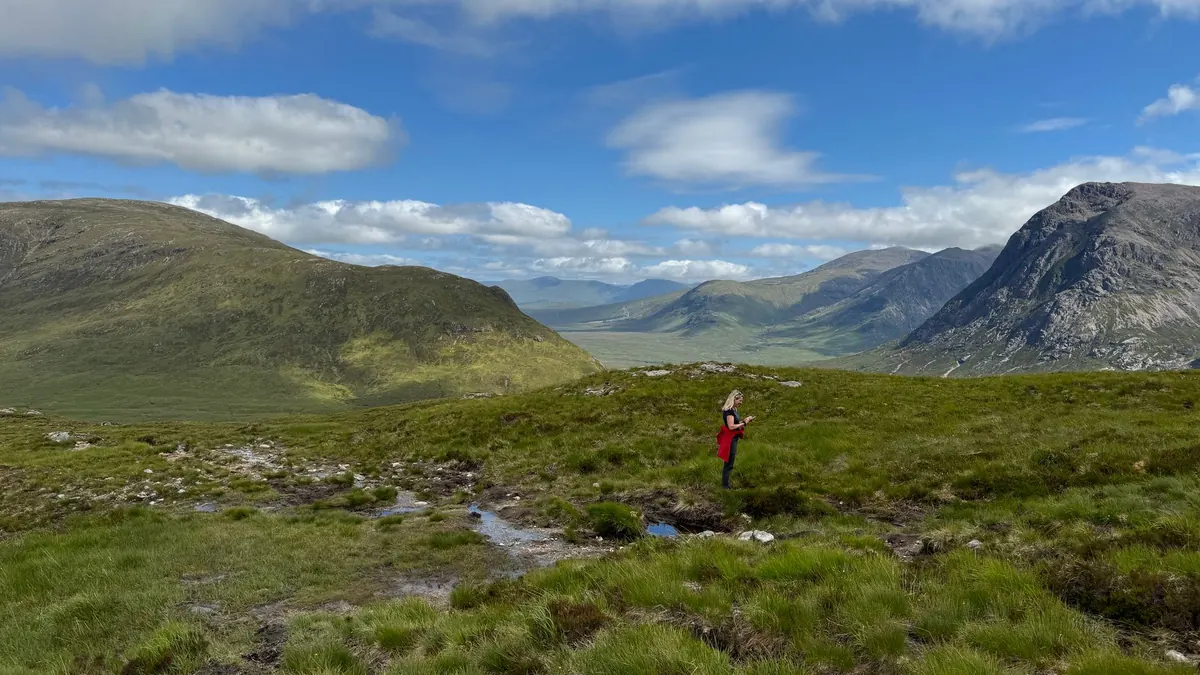
The Scottish Highlands have a way of making a straightforward plan look optimistic. A route that reads as a pleasant half-day on the map can turn into nine hours of bog, cloud and headtorch light, and the walker who copes best is rarely the fittest one. It is usually the one who planned for the day they didn't get.
None of this should put you off. Highland walking is some of the best in Britain, and most of what goes wrong is predictable and easy to prevent. These are the mistakes that catch new walkers out most often, and the fixes that take minutes to learn.
Assuming the forecast is a promise
The forecast says showers, so you pack a light jacket. Four hours later you are on a plateau in strong wind with rain coming in sideways and hands too cold to open a zip. It happens every weekend somewhere in the Cairngorms, and it is almost always a kit problem rather than a fitness problem.
Highland weather is genuinely local. It can be dry in Aviemore and pouring in Fort William on the same afternoon, and a 1,000-metre summit is several degrees colder and far windier than the car park you left behind. Cloud can arrive in twenty minutes and settle in for the day. That is not a reason to stay home; it is a reason to check a mountain forecast instead of a town one.
- Read the mountain forecast, not the town one. The Met Office mountain pages and the Mountain Weather Information Service give summit temperatures, wind speeds and cloud-free heights. In winter, check the avalanche reports as well.
- Assume the summit is a different climate. Add a warm layer, a hat and gloves whatever the valley is doing. Wind chill does more damage than low temperature on its own.
- Take waterproofs that mean it. A showerproof shell is fine for a city. On a Scottish hillside you want a proper waterproof jacket and trousers, carried rather than left in the car.
- Keep the important things dry. A dry bag or two for your phone, map and spare layer costs very little and saves a great deal of misery.
In winter and early spring this shifts from uncomfortable to serious. Snow can linger in north-facing gullies well into spring, and ice axe and crampon skills are not optional extras on steep ground. If you are new to those conditions, start on low hills or go out with someone experienced before committing to a big day.
Underestimating the route
Two things get missed when planning: ascent, and what the ground is actually like. A 12 km walk with 900 metres of climbing takes far longer than a 12 km walk on the flat, and pathless Scottish terrain — tussocks, peat hags, deep heather, loose scree — can halve your speed without any warning sign on the map.
Guidebook times assume a fit, experienced walker on a reasonable day with few stops. If you are new to it, walking in a group with mixed abilities, or dealing with poor visibility, add a generous margin. As a rough planning tool, allow about an hour for every 5 km on the flat and another hour for every 600 metres of ascent — then add extra for bog, boulders, photographs and that steep final kilometre, which is nearly always the slowest.
Two habits make the biggest difference. First, set a turnaround time before you set off, and stick to it even if the summit looks close. Second, know your escape routes: a valley path, a forestry track, a lower ridge line. Being able to shorten a day without panicking is a skill worth practising. Check river crossings after heavy rain, and in the stalking season — roughly late summer into autumn — look at whether local estates are asking walkers to use alternative routes on certain days.
Midges, ticks and the small biting things
Midges deserve their reputation, but they are predictable. They dislike wind, bright sun and dry air, and they love still, damp, cloudy evenings near water — which describes a great many Highland campsites in July. The season generally runs from late May into September, worst in midsummer.
- Carry a head net. It weighs almost nothing and turns a miserable evening into a tolerable one.
- Use a repellent formulated for midges, applied to exposed skin and to cuffs and collars.
- Wear long sleeves and trousers at dusk rather than shorts and a t-shirt.
- Pitch away from bog, standing water and sheltered hollows. A bit of breeze is your friend.
- Keep moving when they are bad. Midges struggle to land on a walker who is striding out.
- Check a midge forecast for the area before you commit to camping. It is surprisingly accurate.
Ticks
Long grass, bracken and deer country mean ticks. Tuck trousers into socks where you are pushing through vegetation, and check yourself at the end of the day — behind the knees, at the waistband, under the arms and along the hairline. Remove any attached tick carefully with fine-tipped tweezers or a tick tool, pulling steadily upward close to the skin rather than twisting or squeezing. Keep an eye on the bite afterwards. If you develop a rash or flu-like symptoms, speak to a pharmacist or GP promptly rather than waiting to see how it goes.
Leaving emergency planning until it's an emergency
Mobile signal in the Highlands is patchy at best and often absent for whole valleys. That is fine until something goes wrong, at which point it becomes the only thing that matters. The fix is dull and takes five minutes.
- Write down your start point and grid reference, your intended route, and your expected finish time.
- Note where you have parked and the car registration.
- Give it to someone at home who will actually notice if you are not back, and agree a check-in time.
- Tell them who to contact if you are overdue and unreachable — Police Scotland on 999 is the route to mountain rescue.
Carry a paper map and compass and know how to use them, even if you also have a GPS app. Keep a headtorch in your pack all year round; a slow day plus an early Highland sunset in winter can leave you in the dark well before you expected it. If you do need help, dial 999 or 112, ask for the police, then ask for mountain rescue. Keep your phone warm and conserve battery by using airplane mode on the hill, and remember that the emergency SMS service only works if you have registered your phone in advance. Register it before you go, not when you need it.
Before you set off: a ten-minute check
Weather forecast and avalanche report read. Route, distance and ascent worked out, with a turnaround time. Someone at home knows the plan. Waterproofs, spare warm layer, hat, gloves, headtorch, food, water, map, compass, first aid kit and midge protection packed. Phone charged, with a power bank if it is a long day.
Get those basics right and the Highlands become what they should be: a place to spend your energy on the view rather than on the consequences.
Photo: Geert Rozendom / Pexels
Related Articles