Camping
Wild Camping in England: What's Legal, What's Not, and How to Leave No Trace
England is a crowded island with a generous tradition of walking across other people's land, and a confusing set of rules about where you can sleep on it. Ask three people whether wild camping is legal and you'll get three confident answers that don't match.
Here's the honest version. There is no general right to wild camp in England. There is also, in most circumstances, no criminal offence in quietly bivvying on a hillside. What sits between those two facts is permission: who grants it, how you ask, and how you behave once you're there.
The law, in plain terms
Start with the default. The land belongs to somebody, whether that's a farmer, an estate, a utility company, a charity or a council. In Scotland, the Land Reform (Scotland) Act 2003 gives a right of responsible access that includes lightweight wild camping on most unenclosed land. England has no equivalent.
Access land is widely misunderstood. The right to roam created by the Countryside and Rights of Way Act 2000 opens up mapped mountain, moor, heath, down and registered common land, on foot, for open-air recreation. Camping is specifically excluded, along with lighting fires. A "right to roam" sign on a gate does not mean you can pitch behind the wall.
Camping without permission is trespass. Trespass in England is normally a civil matter rather than a criminal one, so a landowner's remedy is to ask you to leave and, if you refuse, to take it further. That's why discreet nights out so often pass unnoticed, and why the police are rarely involved. But trespass is still trespass, and there are places where camping is an offence: land covered by byelaws, certain protected sites, anything that blocks a road, track or gateway.
So work from one rule: camp only where you have permission, or where a published permissive arrangement covers you. Anything else is a bet on not being seen, and bets eventually lose.
If nobody has said yes, the answer is no, however remote the spot looks.
Dartmoor and the national parks
Dartmoor is the place everyone thinks of first, and its story is a good illustration of how quickly things change. For four decades it was the one corner of England where wild camping was a legal right, granted under the Dartmoor Commons Act 1985. A court case brought in 2023 by a landowner against the national park authority ended that. The High Court held that the Act did not create a right to camp, and the Court of Appeal agreed.
What replaced it is a permissive scheme run by the Dartmoor National Park Authority with participating landowners. Specific areas, specific conditions: small groups, single nights, no fires, no vehicles, a code of conduct. The details have changed more than once since, so check the authority's current camping map and rules in the week you travel rather than relying on a blog post from two years ago.
National parks are not public land
Being inside a national park changes nothing about who owns the ground. The Lake District, the Peak District, the Yorkshire Dales, Exmoor, Northumberland: the great majority of it is farmed, and much of it is private.
That said, some upland areas have a long tradition of tolerating a single lightweight bivouac high up, away from walls and paths, one night only, no fire. In a few places that tradition survives, and it's worth treating as a favour rather than an entitlement. Some large landowners publish their own permissive rules for defined areas; read them, follow them, and remember that tolerance is withdrawn quickly when people push their luck.
How to ask for permission
Permission isn't a formality. It's the thing that turns a nervous night of listening for footsteps into a decent night's sleep.
- Find the right person. For farmland, that's the farmer or the estate office. Ask at a nearby farm in daylight, or use the Land Registry to find a registered owner if it really matters.
- Ask early. Not at 10pm with a headtorch on. A quick phone call a few days ahead, or a knock on the door, works far better.
- Be specific. Say exactly where, how many of you, one night only, arriving at dusk and gone by eight, no fire, no vehicles, no music, everything carried out.
- Offer to report back. Leave a phone number, and tell them you'll confirm you've left and the gate's shut.
- Take no for an answer. Thank them, ask whether they know anywhere nearby, and move on without sulking.
If nobody says yes, there are good alternatives: small farm campsites, camping barns, and quiet sites that cost little and give you a tap, a loo and a flat pitch. A night in a barn beats an hour of being moved on.
Low-impact camping, done properly
Leaving no trace isn't a slogan, it's a set of habits that decide whether a spot stays usable for the next person.
Pitch and timing
- Choose ground that's already bare: short grass, gravel, rock or a hardened patch.
- Stay at least 30 metres from streams, tarns, reservoirs and private water supplies.
- Keep clear of gateways, tracks, walls and livestock, especially during lambing.
- Small group, one night, one pitch. Move on in the morning rather than settling in.
Everything you bring, you carry out
Food scraps, orange peel, tea bags, wet wipes, the contents of your pockets. None of it belongs in the hills.
For human waste, use a trowel, dig a hole 15 to 20 centimetres deep at least 30 metres from water, paths, buildings and animals, then refill it and disguise the surface. Carry the toilet paper out in a bag. In busy areas, or where the soil is thin, carry everything out.
Fires
Don't. Upland ground is often peat, dry grass or leaf litter, a fire scar lasts for years, and byelaws on several commons prohibit fires outright. A stove weighs almost nothing and boils water in three minutes. If you want a fire, book a campsite with a fire pit, and never light a disposable barbecue on a moor or a beach: they scorch through the turf and get abandoned.
Water, weather and other people
Water from a high stream looks clean and may well be fine, but you cannot tell by looking. Filter it, treat it or boil it, and avoid anything below farmland, beside a road or in a reservoir catchment. If you're unsure, boil it.
Sound carries at night. Keep voices low, point headtorches at the ground, and don't walk into a quiet spot at eleven o'clock to watch the stars with a speaker.
A quick pre-trip checklist
- Permission confirmed, with a name and ideally a message or email
- A grid reference for your pitch and a plan B a few kilometres away
- Stove and fuel; no fire, no disposable barbecue
- Trowel, plus bags for paper and rubbish
- Filter, purification tablets or enough carried water
- Warm layer, waterproof, headtorch, first aid kit, foil blanket
- Route and return time left with someone at home
- A photo of the pitch before and after you leave, as a habit
The bottom line
Assume you need permission and you'll be right almost everywhere in England. Check Dartmoor's current permissive map before a trip to the moor, treat any tolerance in the national parks as a favour, keep numbers tiny, cook on a stove, and leave the ground looking untouched. That's the whole discipline: it isn't about being entitled to a spot, it's about being welcome in it.
Access arrangements and legal positions do change, sometimes at short notice. For anything that matters, check the current rules with the relevant national park authority or landowner, and take proper advice rather than relying on a forum thread.
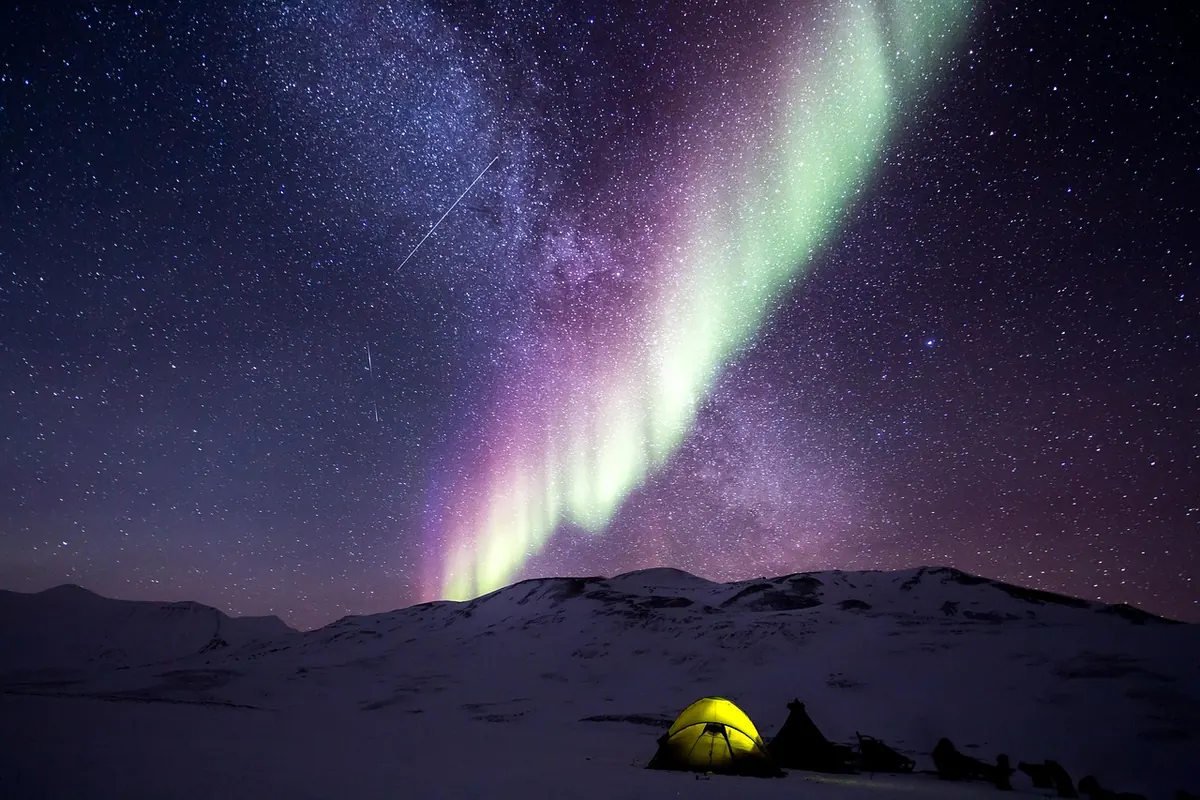
Photo: Noel_Bauza / Pixabay
Related Articles